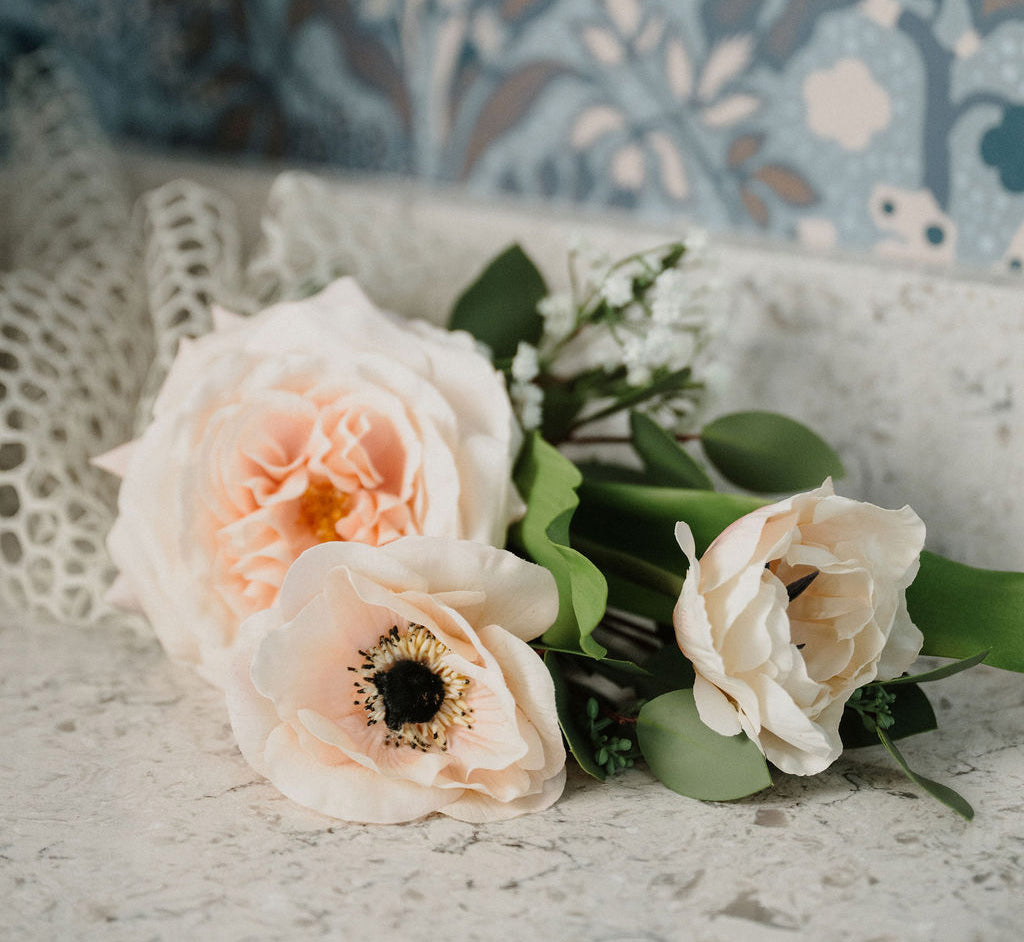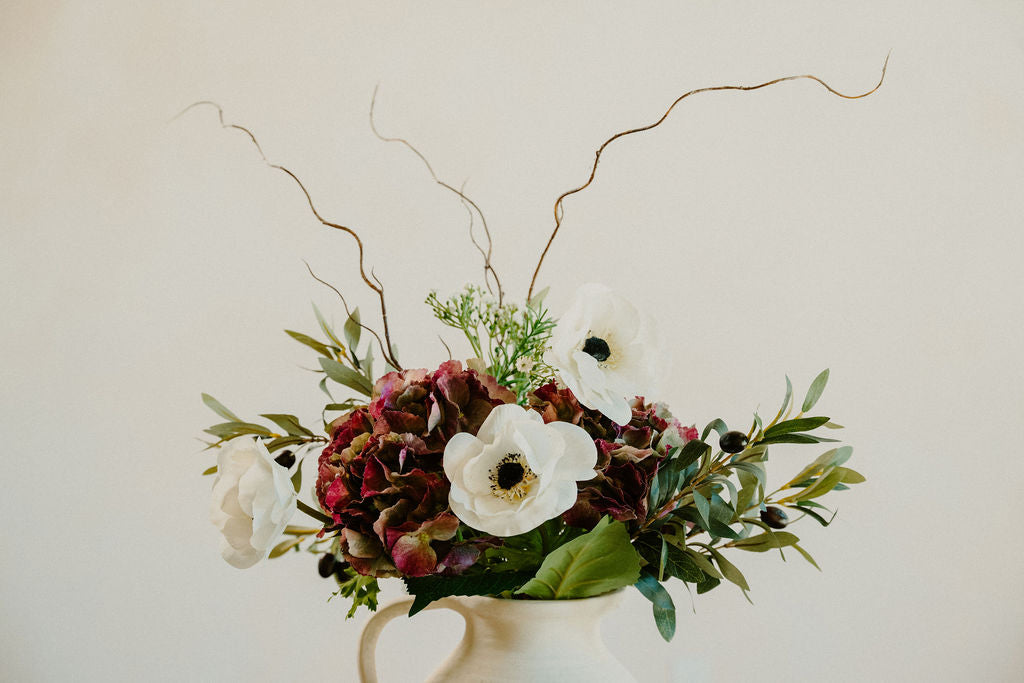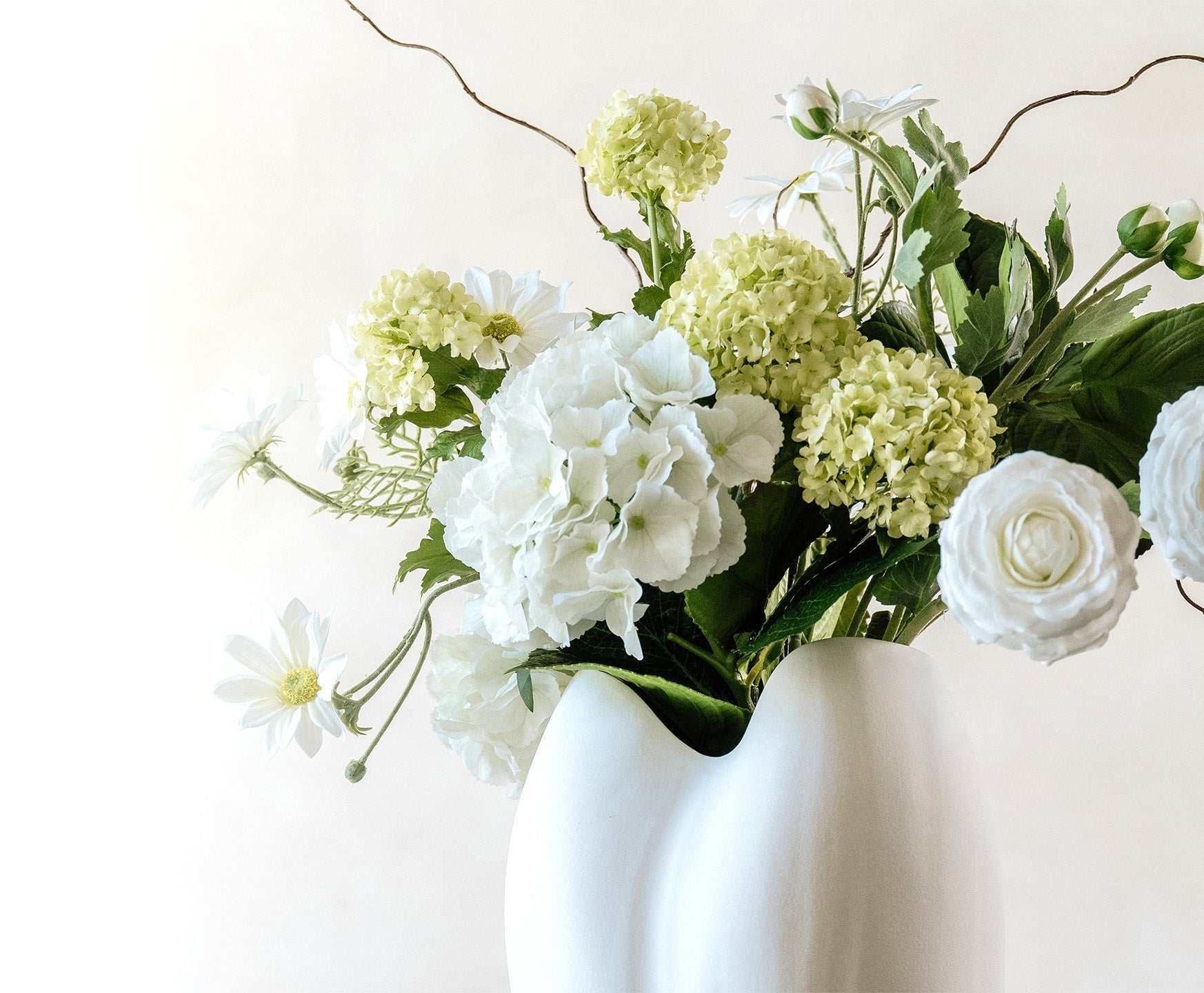


Do you start with the flowers or the vase? A guide to pairing faux florals with confidence.
Faux florals offer something rare in home styling. They allow you to work slowly, thoughtfully, and without the pressure of replacement. But while the flowers often get the attention, it is the vase that determines how the arrangement lives in a space.
The right vase gives faux florals clarity and balance. The wrong one can make even the most beautiful stems feel off. If you have ever wondered whether to choose the flowers first or the vessel first, the answer depends less on rules and more on context.
This guide walks through how to pair faux florals with vases in a way that feels considered, natural, and grounded in your space.
Flowers First or Vase First? Start With the Space
Before choosing either, look at where the arrangement will live.
Ask yourself:
-
Is this filling empty vertical space or sitting within a layered surface?
-
Will it be viewed from all sides or mostly straight on?
-
Does the room already have strong shapes or textures nearby?

If the space feels visually quiet, starting with the flowers can bring direction. If the space already has presence, starting with the vase can help anchor the arrangement.
Start with the flowers when
- A specific bouquet or stem sets the tone for the room
-
Color or botanical style is the main focus
-
The arrangement is meant to draw the eye first
Start with the vase when
-
You are styling a console, entry, or shelf that needs structure
-
The vessel has weight, shape, or texture worth highlighting
-
Florals are meant to support the room rather than lead it
Scale and Proportion Matter More Than Style
One of the most common mistakes in floral styling is mismatched scale.
A general guideline that works across styles:
-
Taller bouquets need taller vases to avoid feeling top-heavy
-
Compact arrangements look best in medium-height vessels
-
Single stems benefit from narrow, restrained forms
As a visual reference, the flowers should extend roughly one to one and a half times the height of the vase. This keeps the arrangement balanced without feeling rigid.
If something looks slightly off, it usually is not the flowers themselves but the proportion between stem and vessel.


How Vase Shape Affects the Arrangement
Vase shape quietly directs how faux florals behave.
-
Straight cylinders keep stems upright and controlled
-
Wide-mouth vases allow bouquets to open and relax
-
Bud and bottle vases focus attention on individual stems
-
Sculptural or urn-style vases bring presence even when lightly filled
If an arrangement feels loose or unruly, a simple solution is adding floral foam or a hidden inner container. This gives structure without changing the outward look.

Styling Faux Bouquets vs Single Stems
Faux Bouquets
Full arrangements benefit from vases that can visually support their volume.
-
Choose vessels with enough width or weight to balance the bouquet
-
Let stems rest naturally at the rim rather than forcing height
-
Subtle texture in the vase adds depth without distracting from the flowers

Single Stems
Single stems are about restraint.
-
Slim vases keep the focus on shape and line
-
Grouping several stems creates rhythm without clutter
-
Slight height variation helps the arrangement feel relaxed rather than stiff
Single stems work especially well on shelves, nightstands, and smaller surfaces where simplicity matters.
Choosing Vases by Room
Entryways
Taller vases help fill vertical space and welcome the eye into the home. These work well with fuller faux florals or structured greenery.
Dining Tables
Lower profiles are best here. Medium-height or narrow-neck vases keep conversation clear and the table usable.
Shelves and Mantels
Smaller vases work better in multiples. Repeating materials or shapes creates continuity without feeling styled for effect.
Material, Finish, and Color
Think of the vase as the quiet counterpart to the flowers.
-
Glass feels light and open and works well in brighter spaces
-
Ceramic adds softness and substance
-
Stoneware and matte finishes ground neutral florals
-
Muted tones allow the flowers to hold attention


For spaces that call for more character, there are thoughtful alternatives.
-
Artful or sculptural vases act as a focal point on their own and pair best with simpler florals or fewer stems, allowing shape to take the lead.
- Colorful vases can add contrast and depth, especially when paired with restrained arrangements or neutral blooms.
An Alternative Approach: Using Baskets in Place of Vases
While vases are the most common choice, there are moments when a basket feels more artful. Baskets bring texture and warmth and create a fuller, gathered look. They work particularly well in entryways, kitchens, and relaxed living spaces, as well as for floor arrangements beside consoles or fireplaces (not too close to the fire).

Floral foam or a floral frog can be used inside the basket to hold the stems in place and guide the overall shape without forcing the arrangement upright. This approach works well for baskets with depth or structure, allowing stems to stand naturally while still feeling relaxed rather than rigid. Our permanent bouquets are pre-tied with a discreet zip tie to hold the arrangement together, making them easy to place directly into a basket and gently fluff so the flowers settle into the shape of the vessel.
In lower, open basket styles, a different arrangement can work better. Instead of positioning flowers vertically, stems can be placed loosely and allowed to rest along one side of the basket, layering and overlapping as they go. This creates a fuller, gathered look, similar to flowers that have just been cut and set down.

Final Thoughts
There is no single formula for pairing faux florals with a vase. What matters most is proportion, placement, and how the arrangement interacts with the room around it.
When the vessel and flowers feel in conversation with each other, faux florals become part of the space rather than an added layer. With the right vase, they settle in and stay.